To See is To Strain
About
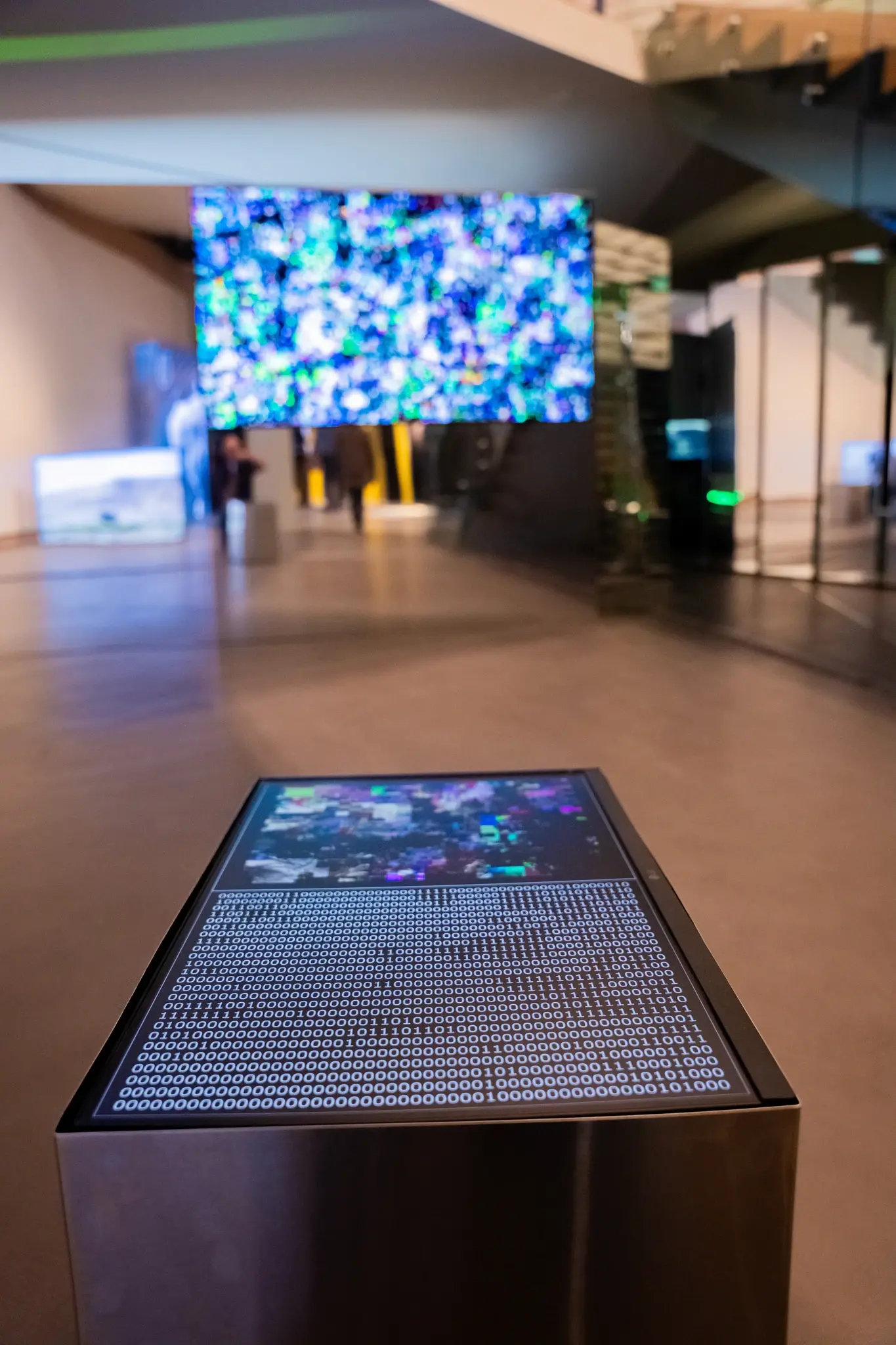
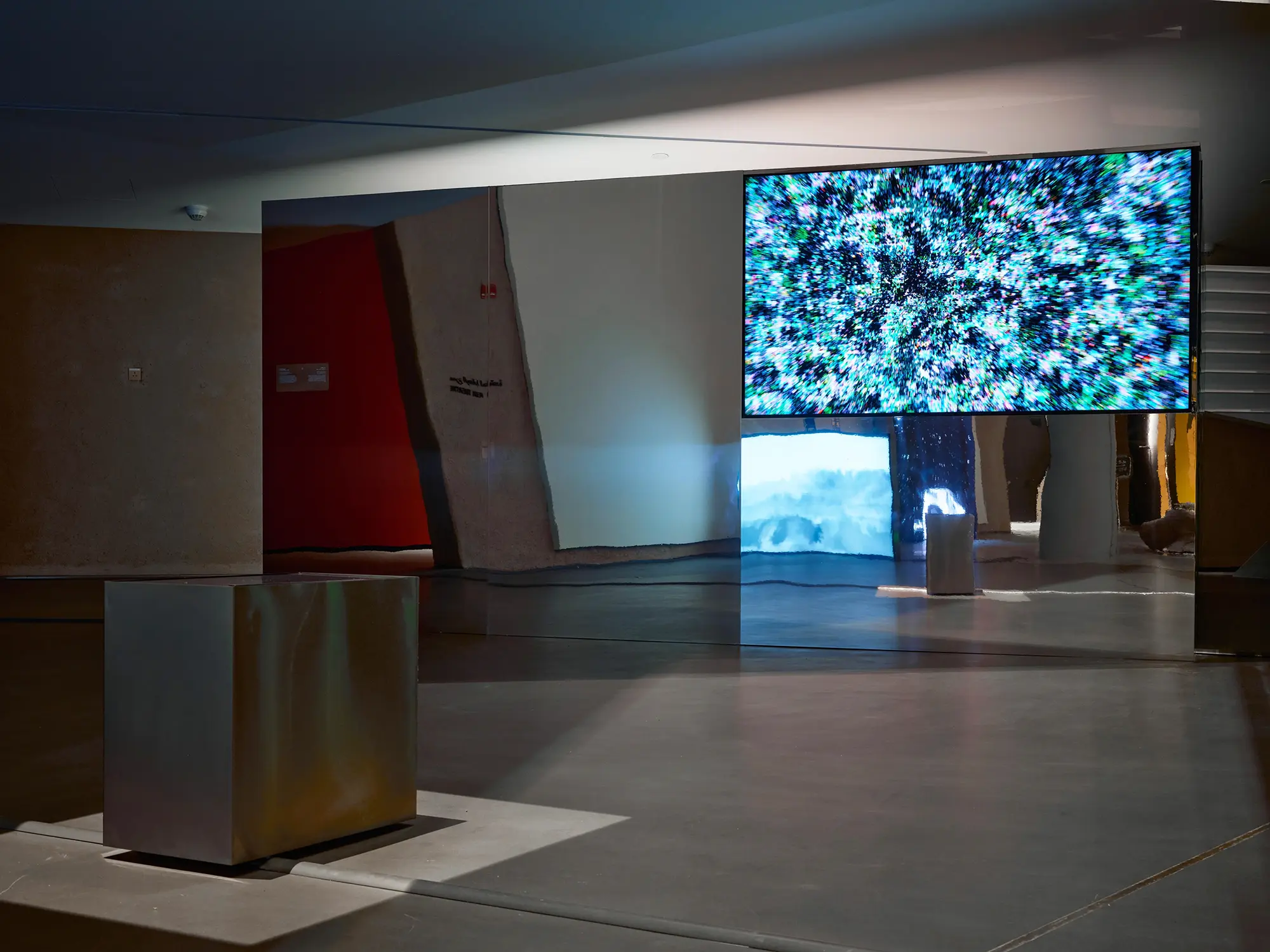
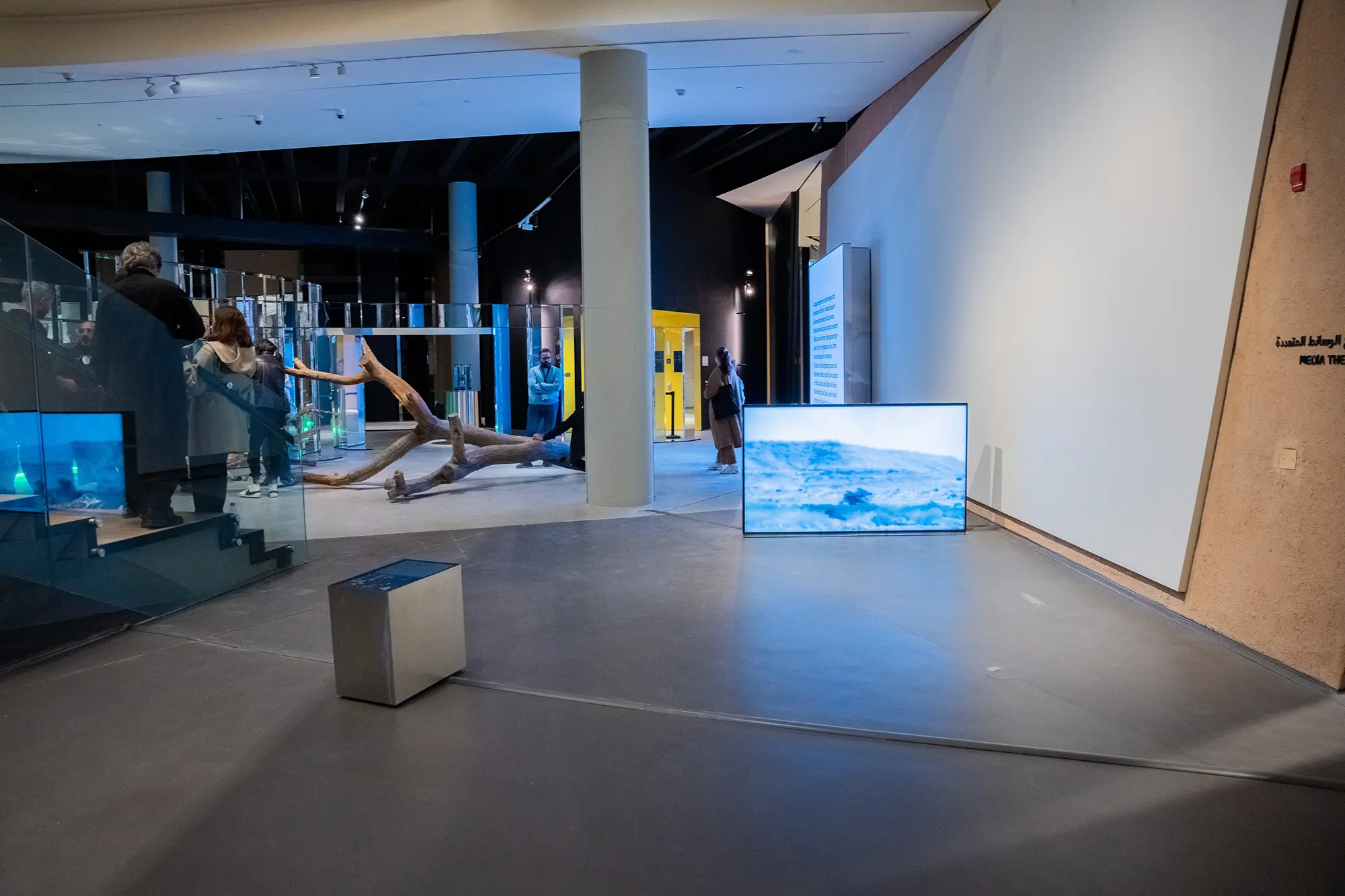
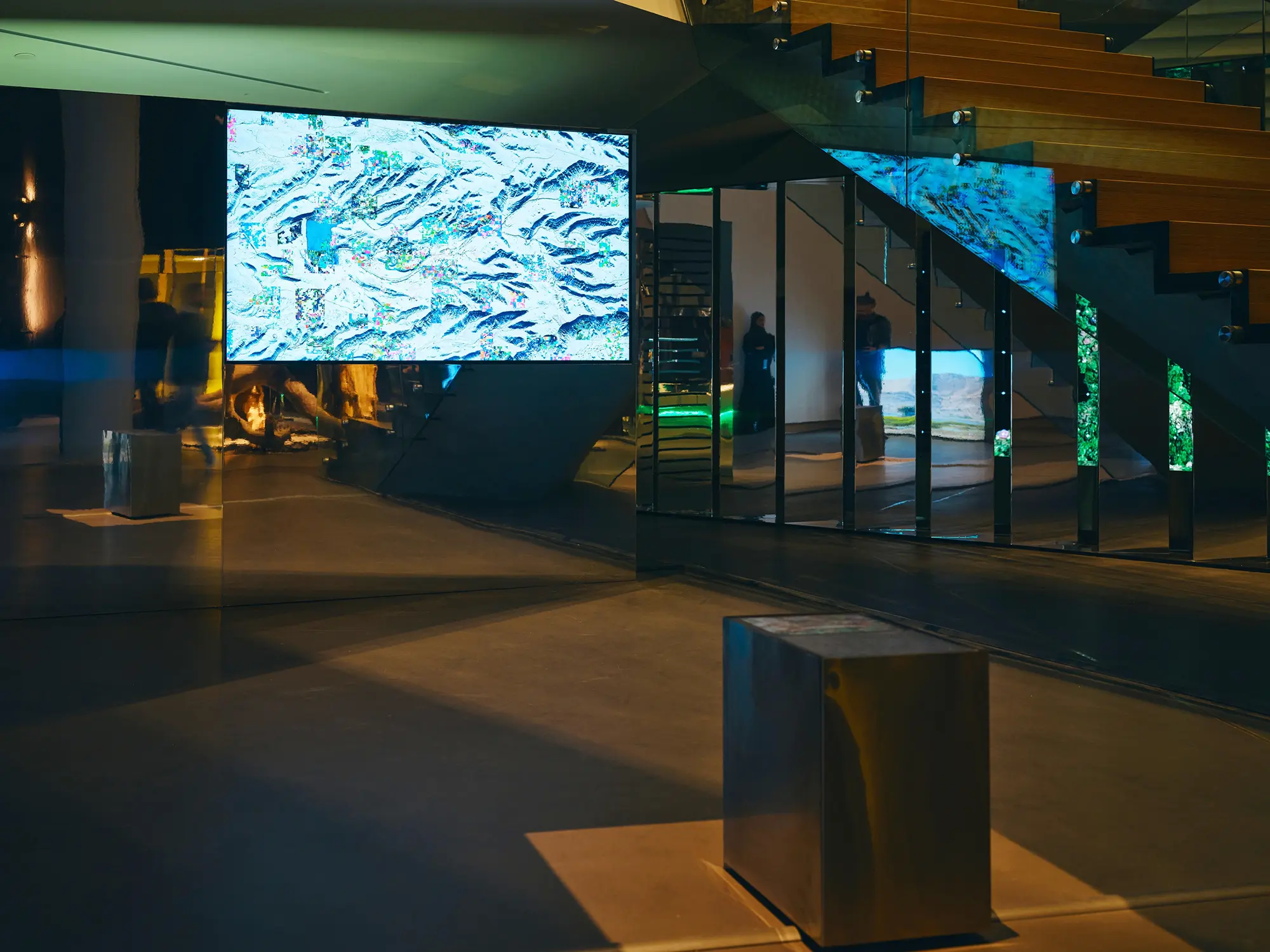
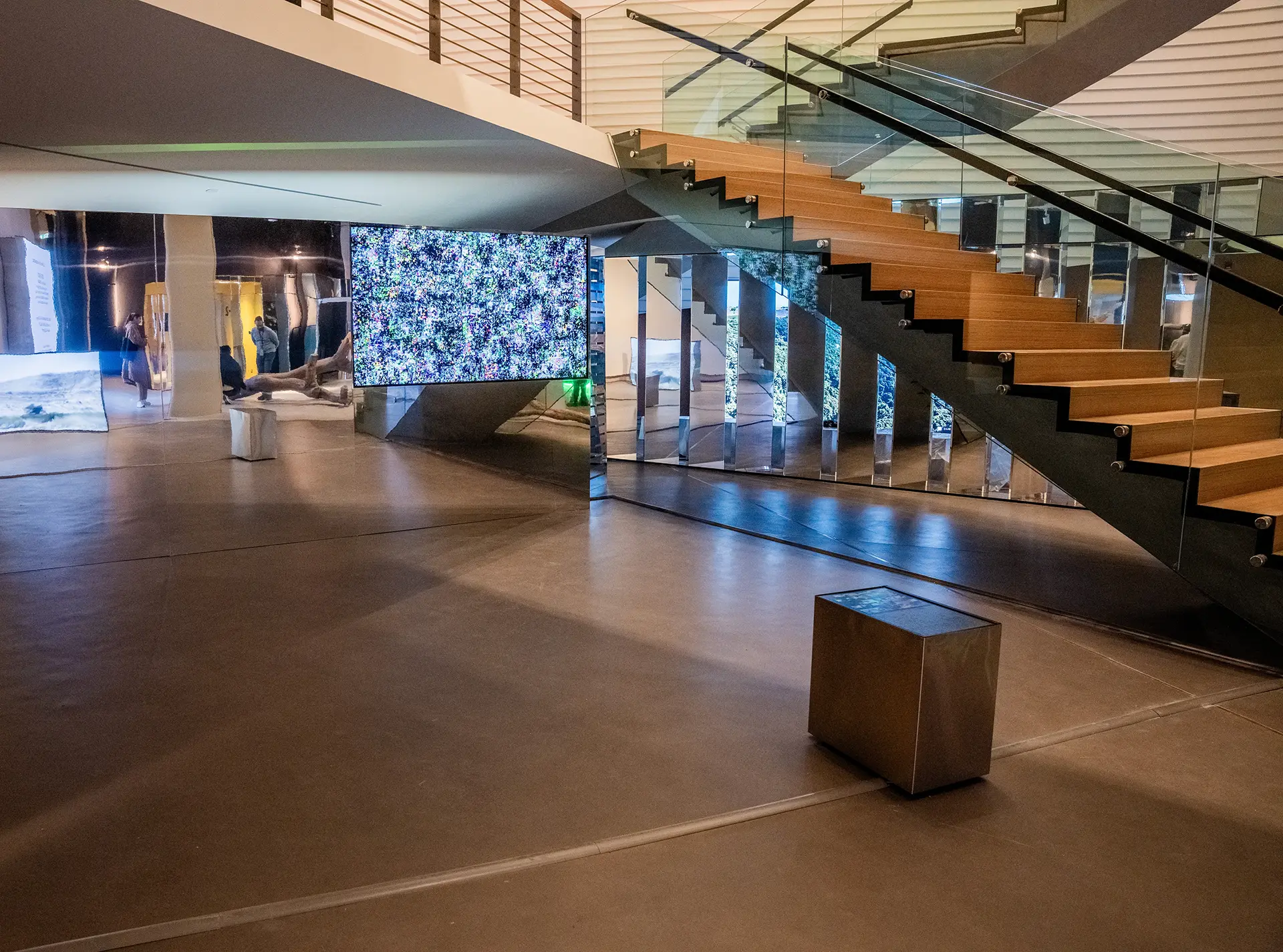
To See Is to Strain is a two-channel video and sound installation that explores the intersection of memory, visibility, and technological erosion.
The project debuted at the exhibition "Of the Earth: Earthly Technologies to Computational Biologies" at Diriyah Art Futures (DAF) in Riyadh.
Developed for artist Aseel AlYaqoub, our studio was responsible for the technical development and generative systems that power the installation.
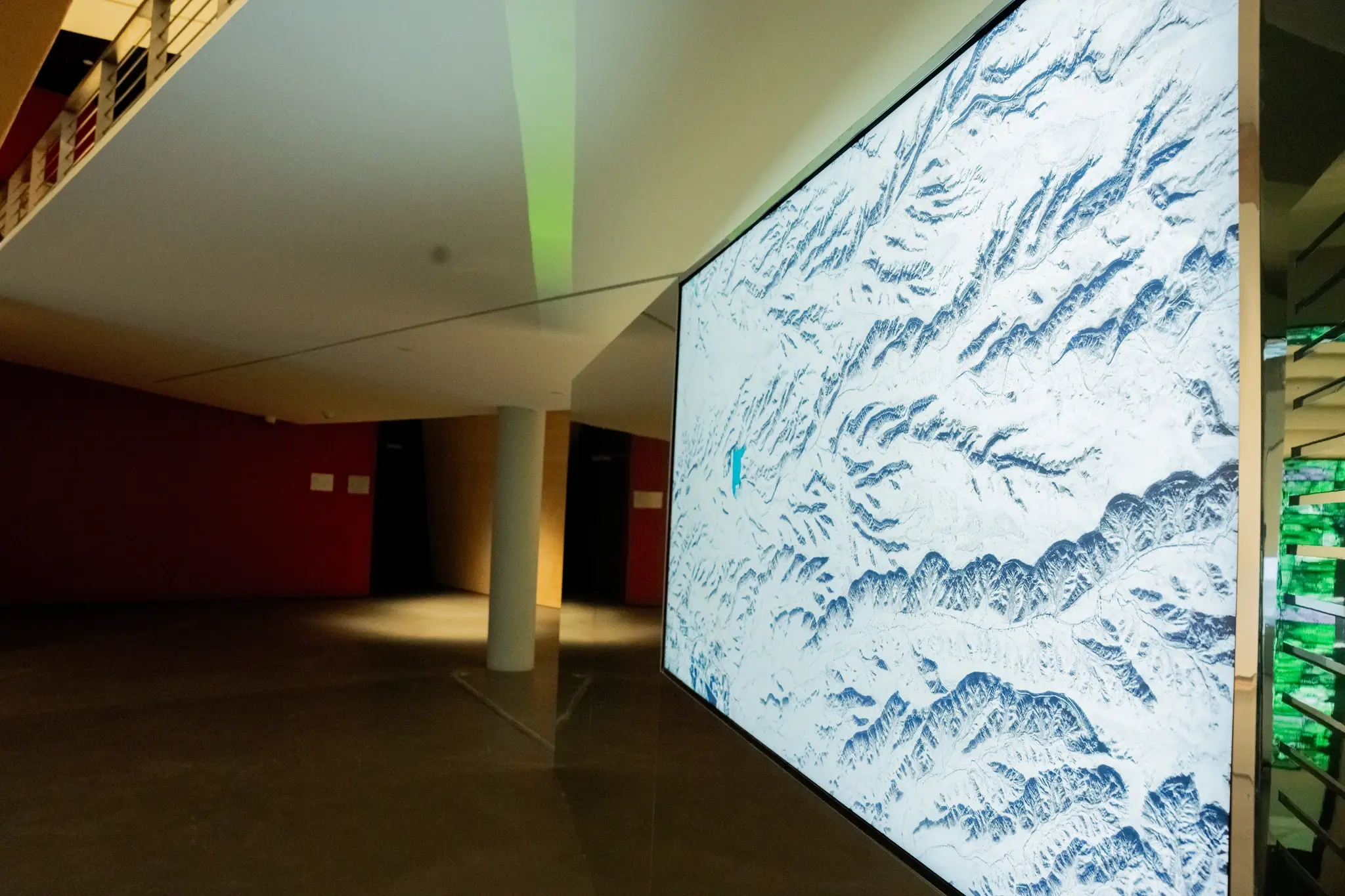
The work centers on a "Secret Lake" west of Riyadh a seasonal body of water that is physically ephemeral but digitally permanent through satellite imagery and social media.
We developed a generative erosion process using creative coding techniques to ensure the work is never static; rather than a loop or a film, it is a continuous system of decay.
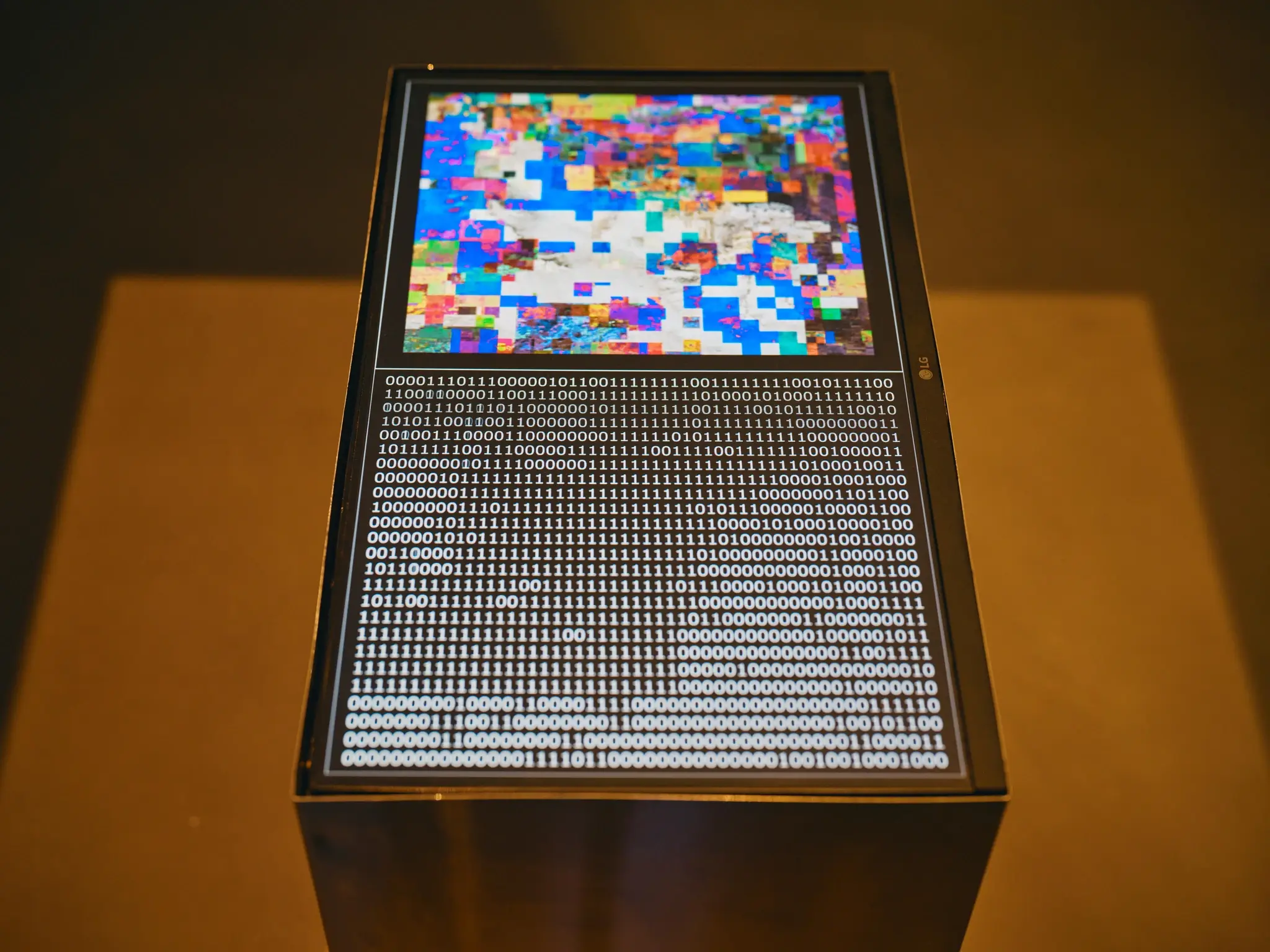
Aerial Generative Logic: We programmed a high-resolution GIS satellite image to undergo structural degradation. This mimics machine memory loss through code-based interference, including compression algorithms, color quantization, and pixel-level artifact layering.
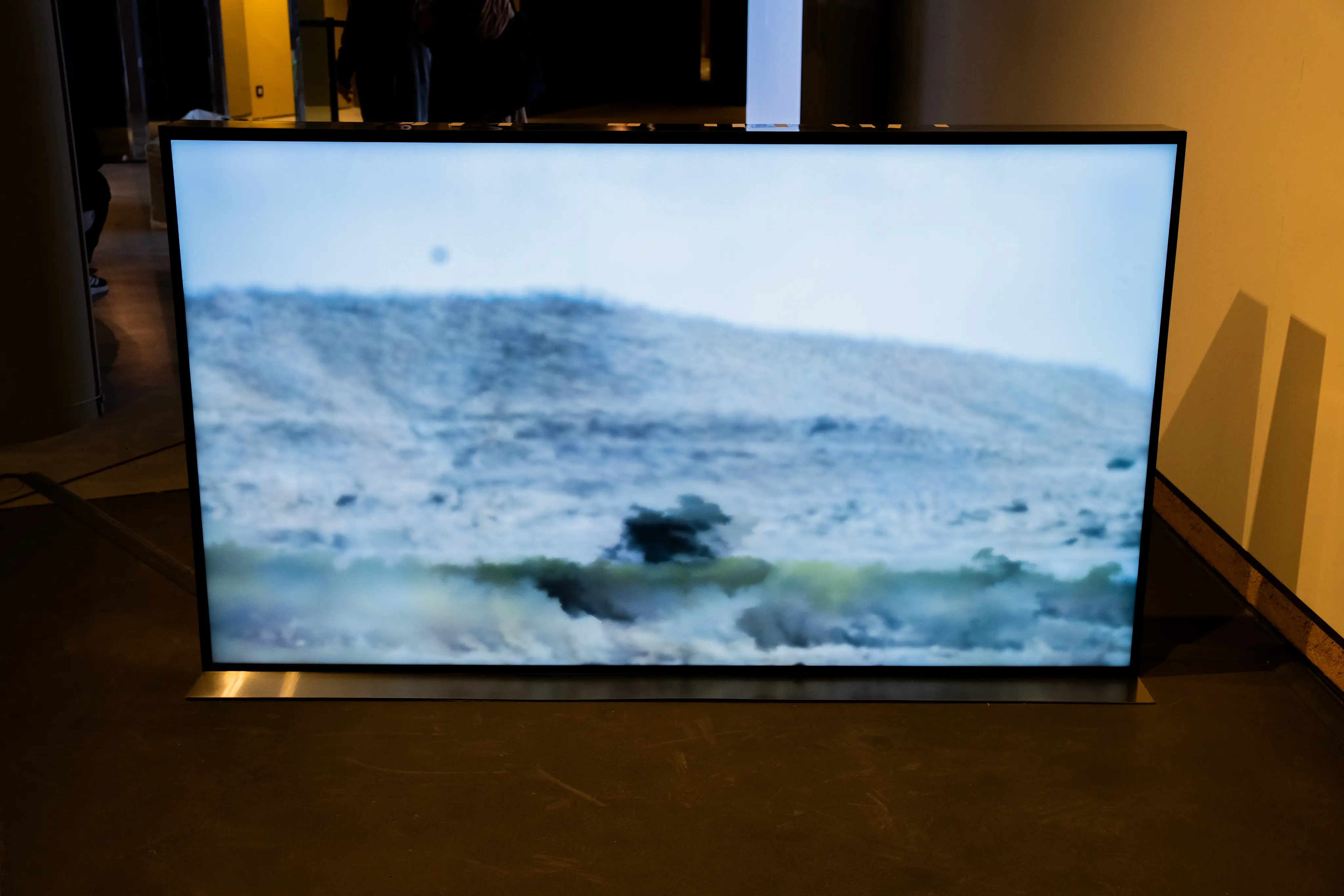
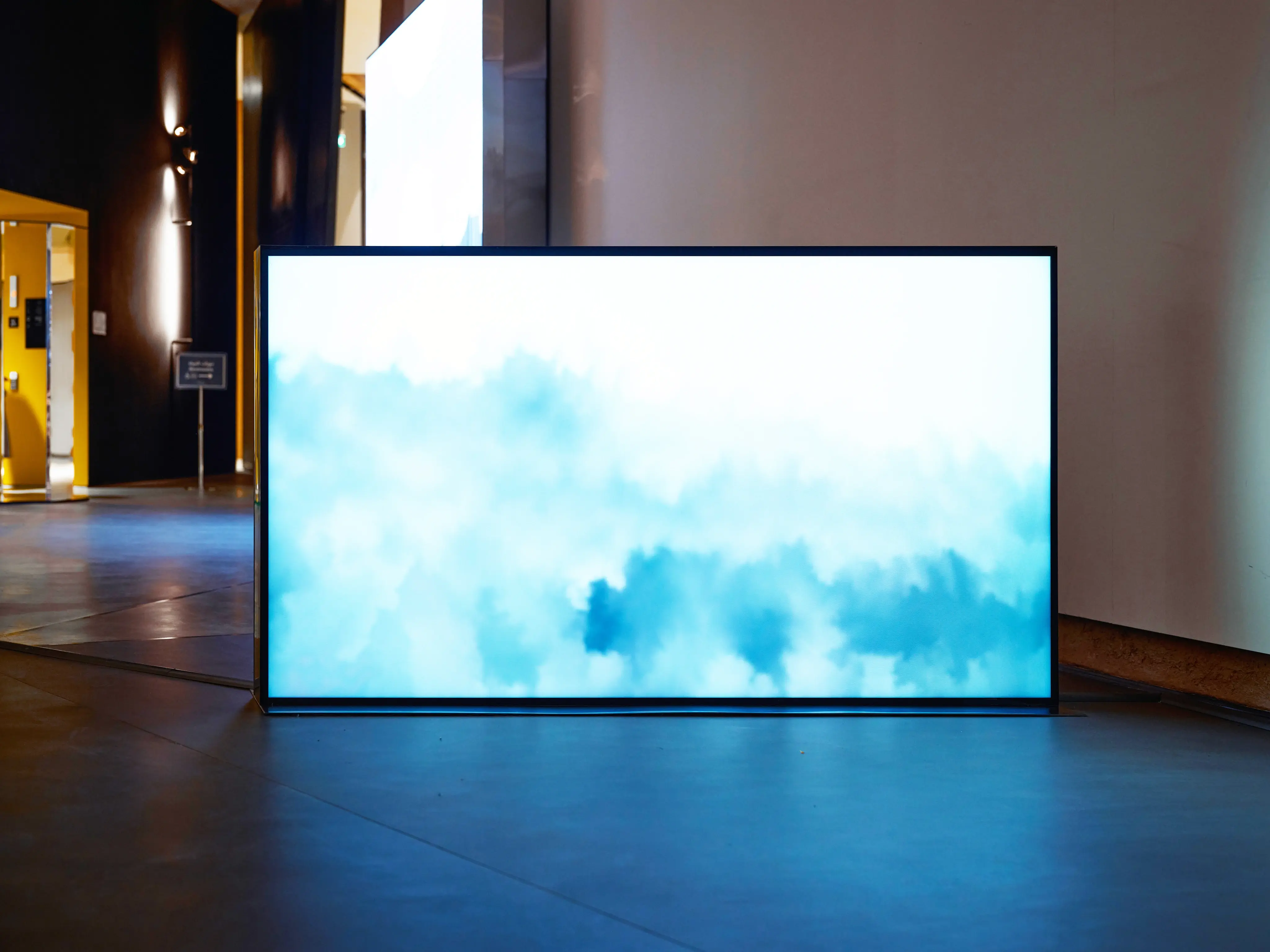
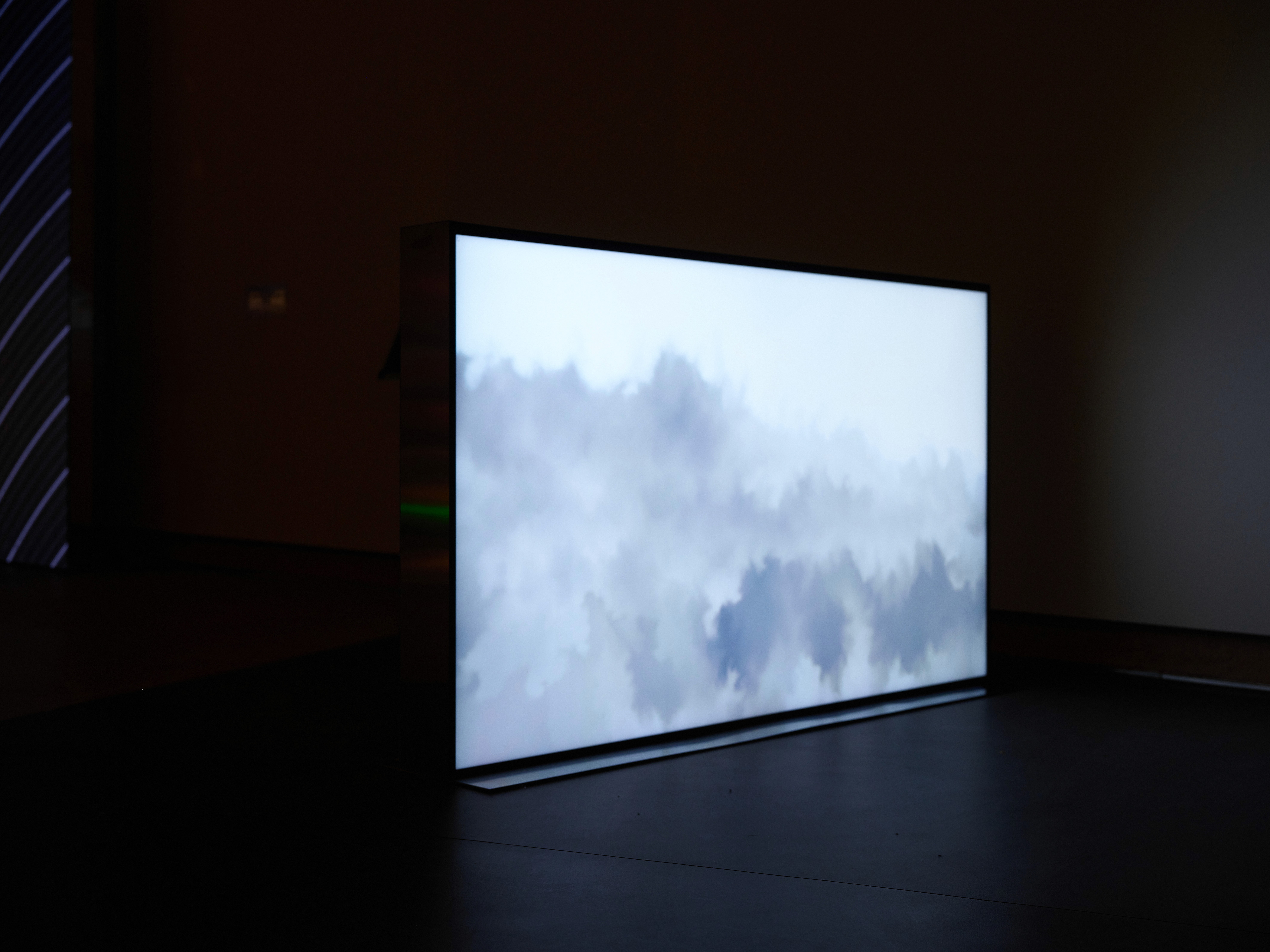
Ground-Level Organic Decay: For the field photography captured at the lake's edge, we implemented a softer logic of erosion. The image gradually fades through contrast softening and desaturation to mirror the "natural forgetting" of human memory.
Seamless Cycles: The system is engineered to run through approximately 40-minute erosion cycles that loop without a reset or return, reflecting a landscape that is constantly being rendered and forgotten.
The auditory layer of the installation was produced by None Studio.
Input: The soundscape is composed of original field recordings, including wind, birds, and water, captured on-site at the lake.
Sonic Erosion: In synchronization with the visual decay, the audio is subjected to programmed filtering, time-stretching, and frequency reduction.
Through these combined systems, the work proposes that witnessing itself carries a cost: the more we attempt to "see" and archive a landscape through technology, the more we inevitably alter it.
Type
Interactive Installation
Year
2026